Pet Loss
How to Cope After Your Pet Dies: Gentle Steps for the Days Ahead
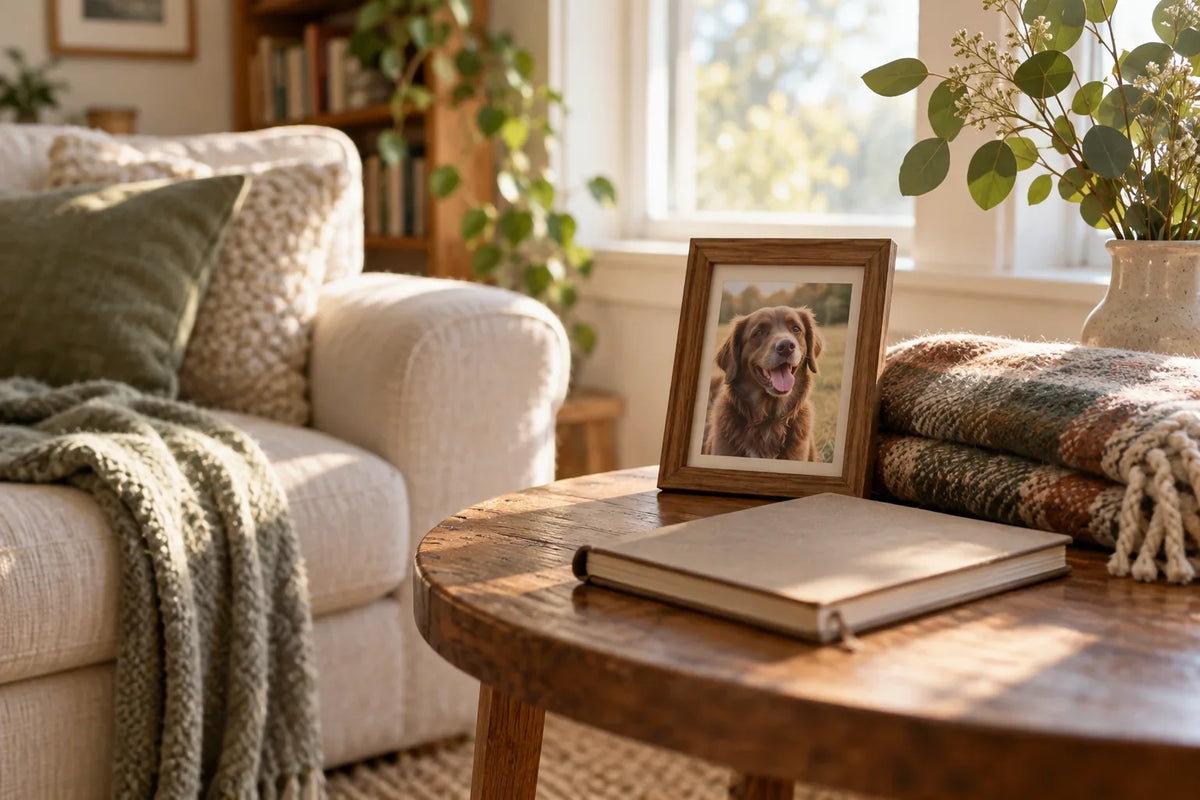
The empty bed, the quiet doorway, the walk you no longer need to take: losing a pet can change the shape of an ordinary day. You do not need to decide immediately what to keep, what to put away or how you should feel.
Start with one practical conversation and one person who understands. Ask your veterinarian about arrangements, and tell someone what would help today. Remembering your pet can wait until you are ready. This is general support, not a grief treatment plan.
What should you do first after a pet passes away?
If the death has just happened and you are unsure what has occurred, contact your veterinarian or an emergency veterinary service. Ask them to guide you through the next steps. There is no need to work out handling or aftercare from an internet checklist.
For the practical conversation, you can write these questions on your phone:
- Who can help with aftercare arrangements?
- What options are available locally, and what do they cost?
- What decisions need to be made now, and which can wait?
- Is there a personal item I should collect before arrangements are completed?
Ask a trusted person to take notes if that feels easier. You can say, “Please help me with the calls today; I do not want to explain everything more than once.”
There is no correct timetable for grief
The AVMA pet loss and grief guide explains that mourning does not follow a prescribed sequence and that support from others can matter. Your relationship deserves recognition even if someone else does not understand it.
Instead of setting a deadline to feel better, choose a manageable next step: eat something, ask for company or postpone a nonessential decision. These are suggestions you can adapt, not milestones you must complete.
What do you do with your pet’s belongings?
Try three temporary categories: leave in place, keep safely and decide later. A box marked “not ready yet” can hold a collar, a favourite toy or photographs. You do not have to sort the whole house in one sitting.
Before passing an item on, you might photograph it and write what it meant. An ordinary blanket can hold a story: where your pet slept, who chose it, or the time they dragged it into another room. For organisation ideas, see our pet memory box guide.
A small memory page, when you want one
Here is an optional starting point that needs only paper or a phone note:
- Choose one photograph that feels manageable to look at.
- Write the place and approximate date, if you know them.
- Finish the sentence “What this picture does not show is…”
- Add one tiny detail: a sound, habit, expression or favourite spot.
- Stop whenever you want. An unfinished page is still yours.
You could write, “This was the window you checked every afternoon,” rather than trying to describe an entire life. Our memorial photo caption prompts offer more quiet starting points.
Where can you find someone to talk to?
Blue Cross Pet Loss Support provides pet-loss support in the UK. If you live elsewhere, ask your veterinary clinic about local bereavement resources. If distress is making daily life hard to manage, consider speaking with a qualified mental-health professional.
Questions people ask after pet loss
Do I have to remove the bed straight away?
No. Choose a pace that suits your household. Keeping it temporarily or putting it somewhere safe are both personal choices.
Should I get another pet to feel better?
You do not need to make that decision now. A future pet will have their own needs and personality. Think about your readiness to care for them, rather than a date on the calendar.
Can I keep memories without buying anything?
Yes. A notebook, existing photographs and a folder are enough. If you later want guided spaces, Your Pet Memory includes an interactive HTML memory experience and a separate printable PDF. It is a keepsake option, not a treatment for grief; use only the pages that feel right.
Written by the Your Pet Memory editorial team. Sources checked October 13, 2026. This article has not been reviewed by a mental-health clinician.