Pet Memories
Pet Memory Box Ideas: What to Keep and How to Organize It
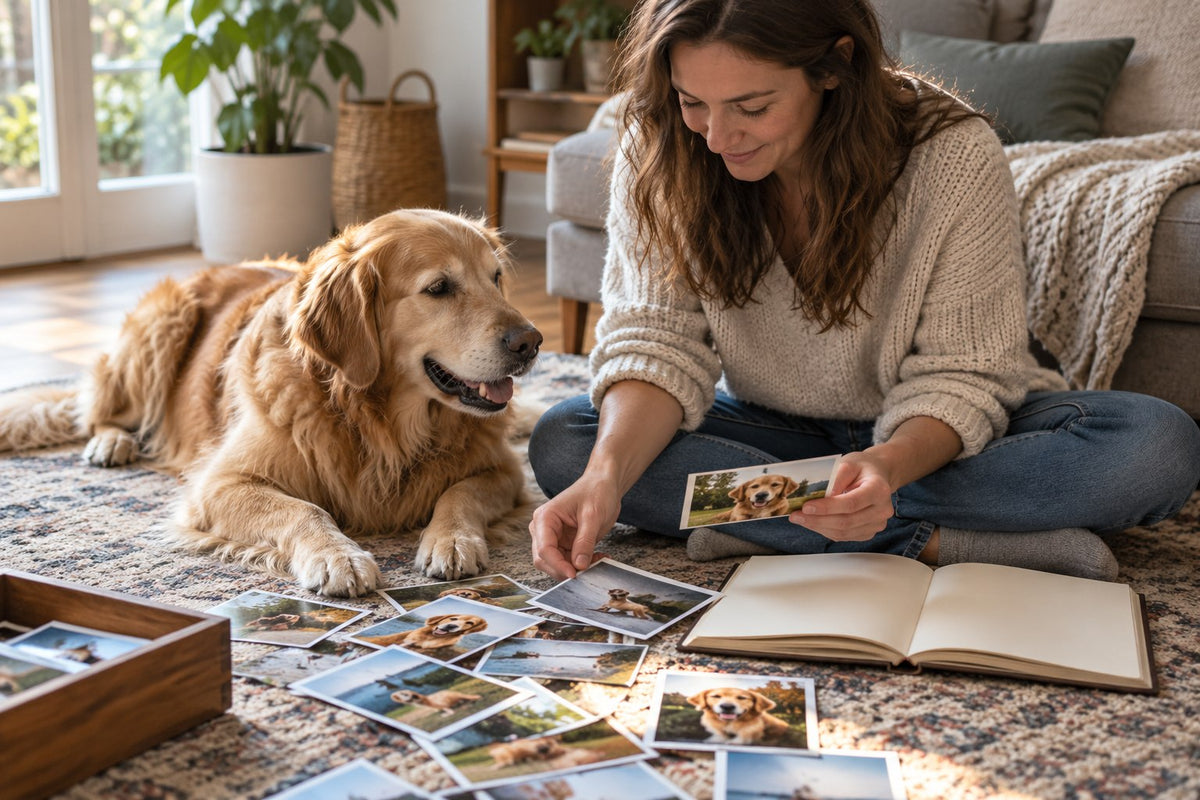
A pet memory box holds a small collection of objects connected to stories: a retired collar, a few photo copies, a letter or a drawing. Choose items because you can explain their meaning, not because you feel obliged to save everything your pet has touched.
You can begin a box while your pet is living. It can hold changing routines and favorite memories, rather than being reserved for a memorial.
Decide what the box is for
Choose whether it will be a private keepsake, a family collection or something you sometimes share. That decision affects what belongs inside. Phone numbers on an old tag, children’s names and confidential documents may need to stay out of a shared version.
Pick a size you can store comfortably. A larger container can encourage you to keep objects without a story. Start with a few items and a written index; you can always photograph something that does not fit.
Eight meaningful items to consider
A retired collar
Save a collar that is no longer in use, with a note about the period you associate with it. Do not remove equipment your pet currently needs to finish a keepsake project. Cover private contact details if you photograph a tag for public sharing.
A small set of photo copies
Choose a portrait, a shared moment and an ordinary routine. Label them with dates or approximate periods. Keep your original digital files separately; the box does not need to hold the only copies of an important image.
A photograph of a favorite toy
A worn, fragile or oversized toy may be better represented by a photograph. Write how it became familiar and which pictures show your pet using it. You can preserve the story without storing the object itself.
A short personal letter
Write about one moment you want to remember. Date the letter, sign it and keep a separate copy if it would be difficult to replace. It can describe the present rather than a goodbye.
A celebration note
Save a birthday or adoption-anniversary card. If your pet’s birth date is unknown, describe the occasion honestly. “The anniversary of the day you came home” has its own meaning.
A drawing or a photographed detail
A drawing of a familiar resting place, a paw photographed naturally or a child’s illustration can fit easily into a box. There is no need to force an ink or clay impression to make the collection complete.
A remembered trip
Keep a simple route drawing or a ticket copy with a short account of the trip. Remove booking numbers, addresses and other sensitive details from anything you will share. Explain which part of the journey mattered to you.
Someone else’s memory
Invite a household member to contribute a few lines. Ask how they want to be credited and whether the recollection can be shared. A family box can contain different accounts without pretending they agree on every detail.
Make an index that connects items to stories
Number each item and write four fields: item number, approximate date, description and associated story or photo filename. For example, an invented entry might read: “04 — autumn 2025 — blue collar — photograph Bean-garden-October.jpg.”
The point is to make the connection findable. You do not need a museum catalog. A sheet in the lid and a separate digital copy are enough for a small collection. Add a new entry whenever you add an object, rather than trying to reconstruct the history later.
Keep paper and objects practical to handle
Avoid pressing photographs directly against sharp or dirty items. Keep loose components from scraping each other whenever the box moves. Use copies for a display you will handle frequently, and seek specialist preservation advice for irreplaceable or fragile materials.
The Library of Congress guidance on caring for photographs provides a starting point for handling and storage. A container described as “archival” is not a guarantee that every material placed inside is suitable.
Do not mix essential veterinary, ownership or microchip records into a decorative collection. Keep those in an appropriate secure place where you can find them when needed.
Pair a box with a written memory book
A box preserves an object; a book can explain the story around it. Give the object and the related page the same small reference number so you can move between them.
If you already use the Your Pet Memory book, a photo-and-story page can provide this context. A notebook works too. The index matters more than the brand or the number of keepsakes.
Frequently asked questions
Does a pet memory box have to be a memorial?
No. You can collect retired items and everyday memories while your pet is living. The box can develop slowly over time.
What if keeping an object feels upsetting?
You can leave it out, ask someone you trust to hold it or postpone the decision. A keepsake project has no required emotional response or schedule.
Should I keep every toy?
No. Choose a few meaningful items or photograph them. More objects do not automatically create a more useful record.
What should I do with oversized items?
Photograph them and write the story. Keep the image filename in your index so the connection is easy to find later.
Related guides