pet-memories
Pets Growing Up: Make a Photo Timeline From Young to Senior
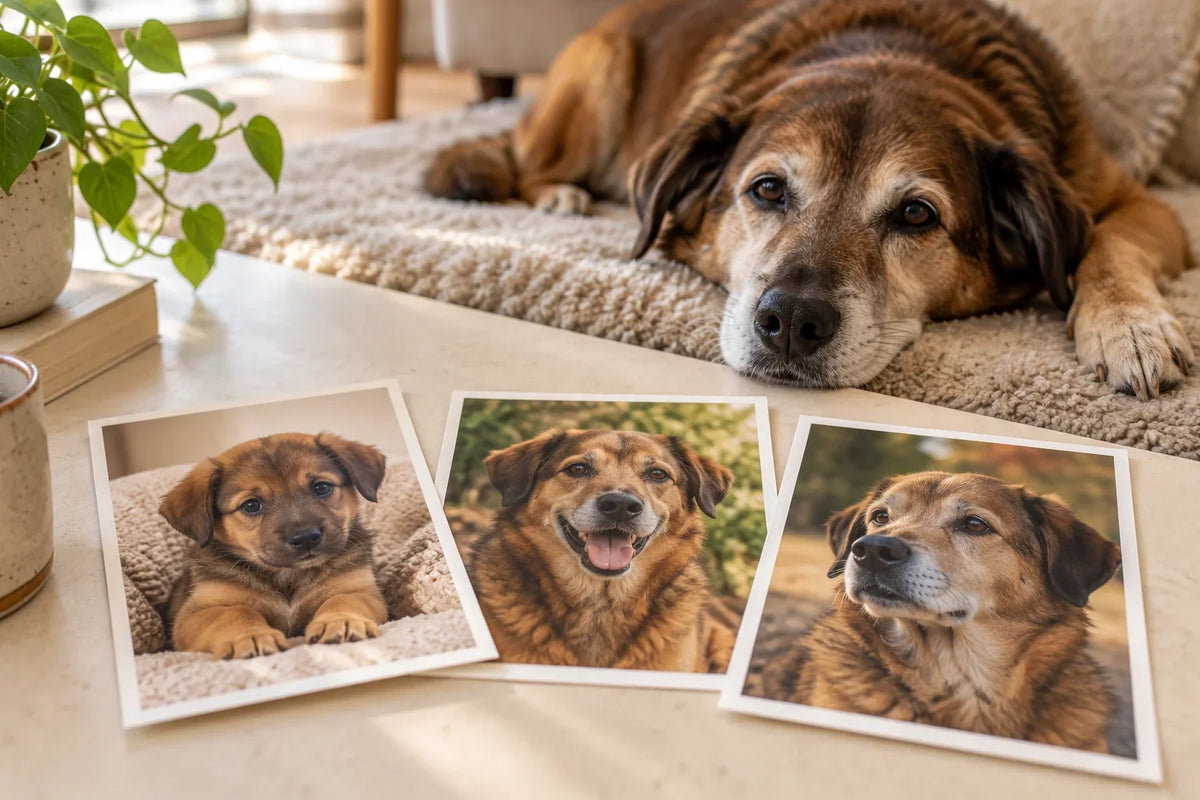
A photo timeline of your pet growing up works best when you repeat a few simple photographs and add the date and a short story. Record their changing routines, favorite places and personality as well as their appearance. You can begin with a puppy or kitten, an adopted adult or a senior pet; you do not need photographs from every stage to tell an honest story.
Growth is more than a change in size
Physical growth and behavioral maturity do not follow one universal schedule. The American Kennel Club's puppy-growth guidance explains that dogs reach their adult size at different ages depending on factors including breed and size. Do not use a photograph or this journal to diagnose development. Your veterinarian can advise on your individual pet's growth and changing needs.
For a memory timeline, you can use simple labels such as “first month together,” “young adult” and “this year's senior portrait.” If an age is estimated, say so. Avoid converting every pet into a single human-age formula or treating a birthday as proof they have reached a medical life stage.
Choose three photographs to repeat
- A comfortable portrait. Use soft light in a familiar place. Let the pet choose their position.
- A wider scene. Include a favorite resting spot, a familiar person or the setting around them.
- An ordinary detail. A toy, an expression, a sleeping habit or the way they greet you can reveal change that a posed portrait misses.
Use a similar viewpoint each time, but do not force an exact pose. Keep props and handling optional. As your pet's comfort or mobility changes, change the activity too. A restful portrait can be just as valuable as a photograph from an outing.
A timeline you can start today
| Photo or moment | Story to record |
|---|---|
| The beginning you know | First meeting, adoption or earliest available photograph. |
| An early routine | What they enjoyed and what helped them feel at home. |
| A small milestone | A comfortable experience, learned routine or new favorite place. |
| An adult chapter | The habits and relationships that became part of daily life. |
| A later-life chapter | What comfort and companionship look like now. |
| Today | One ordinary moment you want to remember without waiting for an occasion. |
In a rapidly changing early period, monthly photographs may be convenient. Once a routine is established, a birthday, adoption anniversary or seasonal check-in may be easier to maintain. This is a practical recording rhythm, not a medical schedule. Missed months do not make the project incomplete.
Write what the camera cannot show
For each entry, record the actual date, known or estimated age, place, people present and what happened. Then add one sentence beginning “This month, you started __” and another beginning “You still __.” The pair shows change and continuity without reducing the pet's life to their appearance.
For an adopted adult, begin with the information you can verify. Keep any earlier photograph labeled with its source and date if known. If you are unsure, use “date unknown” rather than reconstructing a fictional early life.
Make room for the senior years
Older pets still have present-day stories. Record favorite resting places, familiar company and comfortable routines. Let their current needs determine the activity and ask your veterinarian about health-related limits. A timeline can celebrate companionship without turning every later-life page into a farewell.
Back up original photos independently, then select a smaller set for the story. Put dates into filenames or captions so future you can tell the chapters apart. Keep photos from different pets clearly identified.
Keep the photo and the story together
Your Pet Memory is one digital memory-book product with Dog, Cat and Companion editions and 100 guided activities. The interactive HTML download lets you add photos, write stories and track completed activities in a modern browser. A separate printable PDF is provided for handwriting. No physical book is shipped. Save your personalized HTML copy regularly and keep your original photos separately.
Questions people ask
When do pets stop growing?
It varies by species and individual. Dogs' growth also varies with breed and size. Ask your veterinarian about your own pet; use this timeline to record memories, not assess development.
How often should I photograph my puppy or kitten?
Choose a rhythm you can maintain, such as a monthly early-life check-in. Short, comfortable sessions matter more than a rigid schedule.
Can I start a timeline for an adult or senior pet?
Yes. Start with today and the photographs you already have. Clearly label unknown dates or estimated ages.
What should I record besides photos?
Dates, favorite routines, places, people and one specific story. Those details explain how life together changed over time.
Keep exploring