Pet Memories
How to Preserve Pet Memories: Photos, Stories and Keepsakes
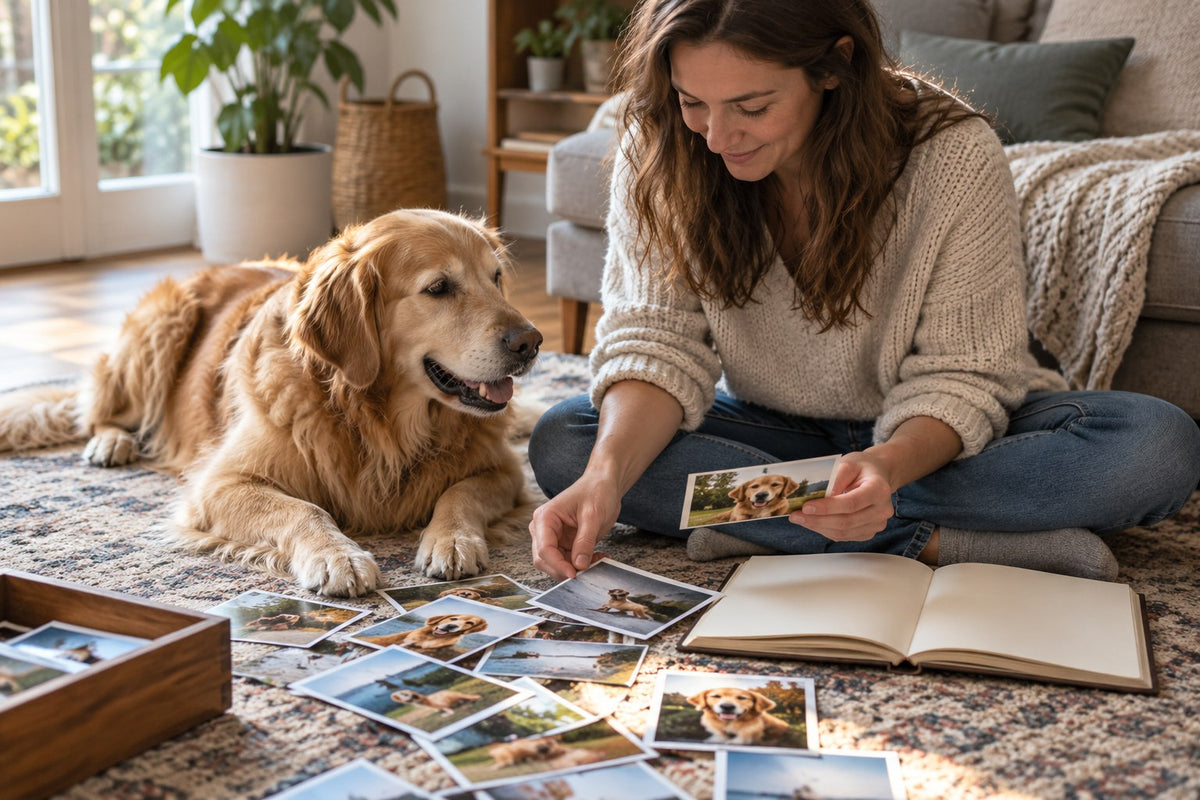
A keepsake is useful when you can connect it to a story. A collar in a drawer may mean a great deal, but years later you might struggle to remember which walks it belonged to or when you changed it. A photograph can have the same problem: the picture survives while its context disappears.
Preserving pet memories means keeping the object or file, recording what it represents and making sure you can find it again. This guide helps you build a small system for photographs, stories, sounds and physical keepsakes. You can begin while your pet is beside you or use it gently to gather memories afterward.
If you want to preserve physical objects alongside your stories, use the pet memory box guide. For the digital collection, follow the pet photo backup checklist and test your saved copies.
Choose what you want to remember
Start with four kinds of memory: personality, routines, relationships and experiences. Personality includes a funny habit or a preferred toy. Routines include the morning greeting or a familiar route. Relationships include the people your pet sought out. Experiences include a trip, a first visit or a quiet birthday.
Make a list of one example in each category. This gives you a manageable beginning and avoids the pressure to preserve everything. You can collect the same sort of memory in several ways: a video of the morning greeting, a written description of it and a photograph of the doorway where it happens.
For a pet who has died, separate gathering from editing. You can put files and objects in a safe place without deciding how to display them. A private collection is still preservation. You do not need to turn a difficult memory into a finished public tribute.
Make a memory inventory before buying storage
Use a plain note with five columns: item, location, date or period, story and next action. Write “blue collar, hall drawer, first year with us, worn on the seaside trip, photograph and label.” For a digital item, write its folder or device location rather than “somewhere on my phone.”
Mark items that are irreplaceable. An original adoption document, a one-off voice recording and a single printed photograph deserve a different level of care from easily replaced supplies. Personal records should remain private even if you use a small part of their story in a journal.
Do not begin by transferring every object into one box. Photograph the collection first, record where important items are and decide what each one needs. Paper, textiles, metal tags and digital files do not share the same storage requirements.
Preserve photographs in two useful forms
Keep originals and a smaller selection for use. Originals give you flexibility for later printing or editing. Your chosen collection makes it possible to enjoy the memories without opening thousands of files.
For digital originals, copy rather than move until you have checked the destination. Keep a second copy in a separate location you control. After a device replacement or a change of storage service, open a few older files and confirm that the names, dates and content are still accessible. A storage subscription is not a promise that a file will always be easy to retrieve.
For printed photographs, the Library of Congress photograph-care guidance explains suitable handling and storage. Use clean, dry hands, support the photograph and avoid experimenting on valuable originals. A display copy lets you enjoy an image while storing the original more carefully.
Our guide to organizing pet photos provides a practical sorting workflow. Here, the goal is simpler: know which file is the original and where an additional copy lives.
Record the sounds and movements photographs miss
A short video can preserve a familiar greeting, a characteristic walk across a room or a toy being investigated. Record an ordinary moment with its natural background sound. There is no need to make your pet repeat something or provoke a reaction for the camera.
Name the file with a date and context. “Kitchen-greeting-October-2026” is easier to understand later than “clip-final.” Add a note identifying voices or background details if they matter to you. Avoid publishing clips containing addresses, private conversations or identifying information without considering who can see them.
Keep the original video when making a shorter edited version. If you share a compressed copy through messaging, do not assume that shared copy preserves the same quality as the original file. Test playback when moving the collection to a new device.
Write down everyday stories while the detail is available
Choose one memory and answer: where, when, who, what happened and what you noticed. Specific observations are more useful than broad praise. “She waited beside the red cupboard when the lead came out” preserves more than “she loved walks.”
Use a small story card for each item. A card might say: “The yellow ball came from Sam in our second summer. We kept finding it under the sofa, and Nori would wait while somebody retrieved it.” That turns an ordinary object into a memory without exaggerating its importance.
Ask relatives or friends for their own observations. Keep their wording attributed to them rather than merging everything into one supposedly complete account. If dates conflict, retain the uncertainty. Memory preservation does not require inventing a perfect timeline.
Choose keepsakes you can care for
A small memory box
Limit the box to selected items and use separate suitable enclosures where needed. Include an inventory and a short explanation for each object. Keep bulky or damp outdoor souvenirs out of contact with photographs and paper. For unusual or deteriorating materials, seek conservation advice rather than applying household products.
A photo-and-story album
An album is helpful when you want to revisit a sequence. Choose a few pages covering a relationship or a season instead of arranging every image chronologically. Use copies of irreplaceable photographs in creative layouts, especially if adhesives or decorations are involved.
A living memory journal
A journal lets you continue recording new experiences. Add an ordinary day alongside celebrations so the collection reflects your actual life. Our pet memory book guide explains how to choose a maintainable format.
A personal display
Display one or two meaningful copies rather than exposing the only original of everything you value. A framed photo with a small story nearby may be more accessible than a large collection visitors cannot interpret. You can change the display when your needs change.
Make a 30-minute starting plan
Use the first ten minutes to choose five items or files. Use the next ten to label them and write one sentence of context for each. Use the final ten to make an additional digital copy or identify the next appropriate storage step.
For example, choose a favorite portrait, a greeting video, a toy photograph, an arrival-day picture and a note about a family outing. You now have a small collection spanning personality, routine, relationships and experiences. Expand it next week only if you want to.
Keep a short maintenance reminder every few months: open the files, check the inventory and add missing context. Preservation is easier when it is a light recurring habit rather than a once-in-a-lifetime sorting marathon.
Frequently asked questions
What if I do not have many photographs?
Write the stories you remember, draw a simple map of familiar places or ask someone close to you for their recollections. A memory project can include words and objects without pretending missing pictures exist.
What if sorting memories feels too difficult?
Store what you have safely and postpone editing or display decisions. Ask a trusted person to help with practical tasks if you want support. You do not owe anyone a finished album, and taking a break does not make the memories less important.
What is the simplest useful keepsake?
One photograph with a dated paragraph of context and an additional saved copy. It is small enough to finish and specific enough to hold a story.
Keep a story you can return to
You can start today with one item and a few honest sentences. If you prefer guided pages, Your Pet Memory provides an interactive digital journal and printable PDF with photo frames, writing prompts, 100 activities, travel pages and seasonal sections. Use the parts that fit your life.
For help with the writing, explore pet photo storytelling and more guides in The Pet Memory Journal.