Dog Adventures
Hiking With Dogs: A Beginner’s Guide (How Far, What to Bring, Trail Etiquette)
Quick answer: Start with short, easy, dog-friendly trails and build distance gradually, just as you would for yourself. Bring water and a bowl, poop bags, a leash and well-fitted harness, ID tags, treats and a basic first-aid kit. Hike in cool parts of the day, keep your dog leashed where required, and check trail rules first — many parks restrict where dogs can go.
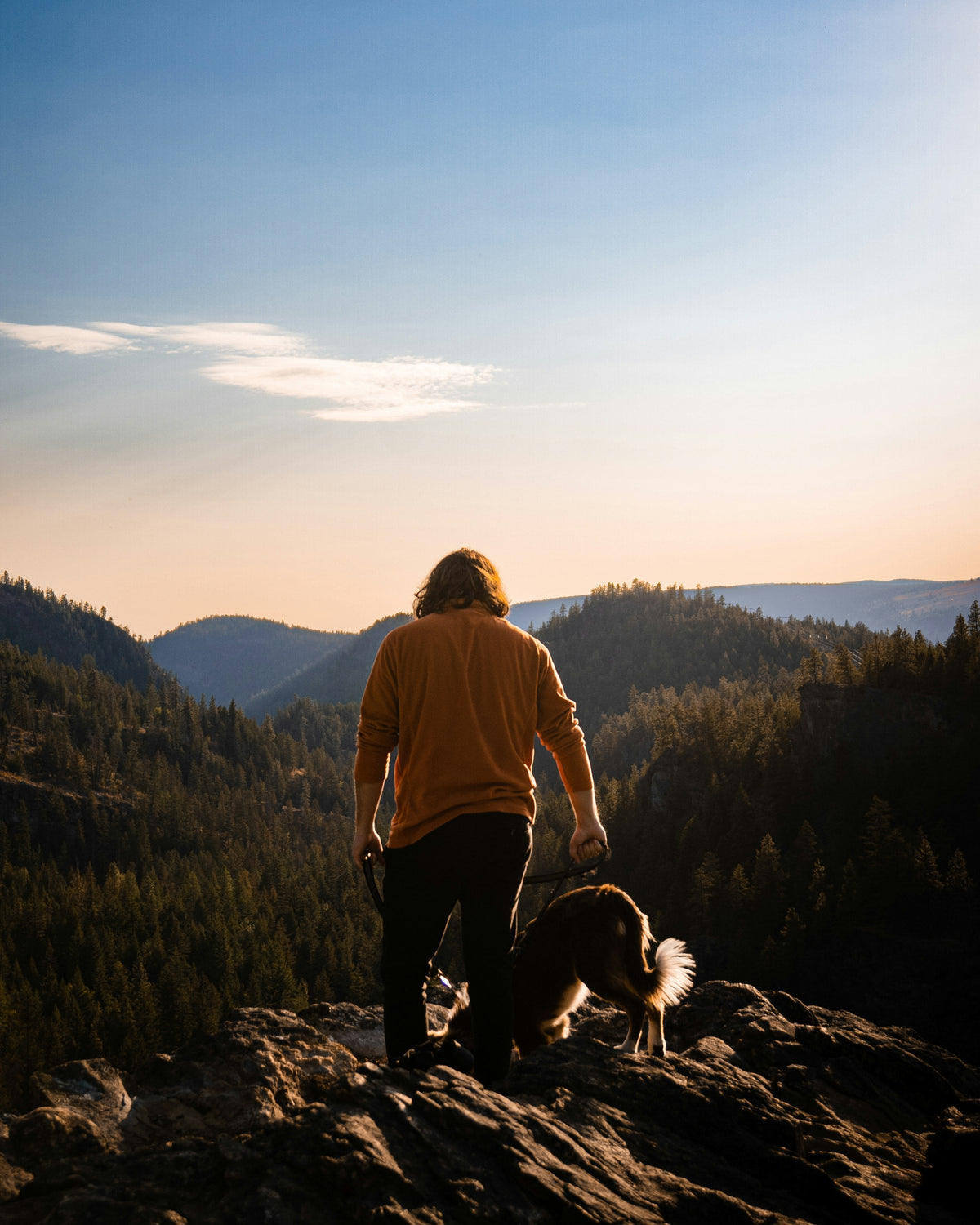
Few things beat a trail with your dog: new smells for them, fresh air for you, and a view at the top you’ll both remember. Here’s how to make the first hikes safe and fun.
Is my dog ready to hike?
- Health: If your dog is very young, older, overweight, flat-faced, or has joint or heart issues, ask your vet before starting.
- Fitness: A dog who comfortably handles long daily walks is usually ready for short hikes.
- Manners: A reliable recall, “leave it” and calm walking on a leash make trails safer for everyone.
- Vaccinations and parasite protection: Ask your vet what’s recommended for wildlife, ticks and water in your area.
How far can a dog hike?
It depends on age, breed, fitness, terrain and weather. Rather than a fixed number:
- Start with a trail you could comfortably walk around your neighborhood — for example, 3–5 km (2–3 miles) on gentle terrain.
- Increase distance or elevation gradually over several weeks.
- Watch your dog, not the map. Lagging, lying down, limping, heavy panting or sore paws mean it’s time to turn around.
- Remember the return trip — turn back while your dog still has energy.
| Dog | Good starting point |
|---|---|
| Fit adult, active breed | Short trails, building toward longer day hikes over weeks |
| Small breeds | Often capable hikers — build slowly and carry a sling for breaks |
| Flat-faced breeds | Short, flat, shaded walks; avoid heat and steep climbs |
| Puppies | Short explore-and-sniff outings only; ask your vet about joint development |
| Senior dogs | Gentle, flat paths with lots of rest stops |
Hiking with dog essentials (checklist)
- Water (more than you think) and a collapsible bowl
- Leash (non-retractable is easier on trails) and a well-fitted harness
- ID tag with your phone number; microchip details up to date
- Poop bags — and a way to carry full ones out
- High-value treats and a snack or meal for longer hikes
- Basic pet first-aid kit (bandage, tape, tweezers or tick remover, saline)
- Towel
- Paw protection (balm or boots) for rough or hot surfaces
- A light or reflective gear for early starts
- Cooling vest in warm weather; a coat for short-coated dogs in the cold
Trail etiquette: the B.A.R.K. rules
The U.S. National Park Service’s B.A.R.K. Ranger program sums it up well:
- B — Bag your pet’s waste
- A — Always wear a leash
- R — Respect wildlife (and other visitors)
- K — Know where you can go
Pets are restricted on many national park trails, so check the specific park’s pet page before you go. Step aside for other hikers, horses and bikes, and keep your dog close when passing.
Safety on the trail
- Heat: Hike early or late, rest in the shade, offer water often. Heavy panting, weakness, stumbling or collapse are emergencies — cool your dog and get to a vet.
- Water sources: Streams and ponds can carry parasites or toxic algae. Bring your own water and avoid scummy or discolored water.
- Wildlife: Keep dogs leashed and close, especially in bear or snake country. Follow local guidance.
- Ticks: Check your dog (and yourself) after every hike — ears, armpits, between toes.
- Paws: Check for cuts, burrs and sore pads at rest stops and at the end.
For general hydration guidance, see how much water a dog should drink.
After the hike
- Water, a meal and a long nap.
- A tick and paw check.
- Notice any stiffness the next day and shorten the next hike if needed.
Make the hike part of your story
Write down the trail name, the date, the view and the funniest moment while it’s fresh — trail memories blur quickly. The travel journal and adventure pages in Your Pet Memory are made for exactly that. Ready for an overnight adventure next? Read camping with a dog for the first time.
FAQ
Can I take my dog hiking in national parks?
Often only on certain trails, roads and campgrounds. Rules vary by park, so check the park’s pet page before your trip.
Should my dog be on a leash while hiking?
Follow local rules — many areas require a leash. Even where off-leash is allowed, keep your dog leashed around wildlife, livestock, other hikers and cliffs.
How much water does my dog need on a hike?
More than at home, especially in heat. Offer small amounts frequently and carry extra for both of you.
Can puppies go hiking?
Short, gentle explore-and-sniff outings are great for socialization. Ask your vet before longer hikes while your puppy is still growing.
Related reading
Sources
- U.S. National Park Service — Become a Bark Ranger
- Appalachian Mountain Club — Hiking With Dogs: How to Hike Safely and Considerately
- PDSA — Exercise for dogs (puppies and hot weather)