Dog Activities
Mental Stimulation for Dogs: 20 Easy Ideas to Try at Home
Quick answer: Mental stimulation for dogs means giving them problems to solve and natural behaviors to enjoy — sniffing, foraging, chewing, licking and learning. Easy ideas include snuffle mats, scatter-feeding, food puzzles, frozen lick mats, “find it” games, sniff walks and short training sessions. Mental work can tire a dog as much as a walk, and it’s especially useful on rest days.
A long walk tires the legs. A puzzle tires the brain. Most dogs need both — and many get far more of the first than the second.
Why mental stimulation matters
- It reduces boredom behaviors like chewing, digging and barking (see is my dog bored?).
- It helps dogs settle and rest.
- It builds confidence, especially in shy dogs.
- It keeps older dogs engaged.
- It’s a safe outlet on days when exercise is limited by weather or vet advice.
20 mental stimulation ideas for dogs
Sniffing and foraging
- Sniff walks. Let your dog lead and sniff at their own pace.
- Scatter-feeding. Toss part of a meal into the grass or across a clean floor.
- Snuffle mat. A fleece mat that hides kibble between strips.
- “Find it.” Hide treats around a room and let your dog search.
- Scent trail. Drag a treat along the floor to a hidden reward.
- Box search. Several cardboard boxes, one with a treat inside.
Puzzles and DIY enrichment
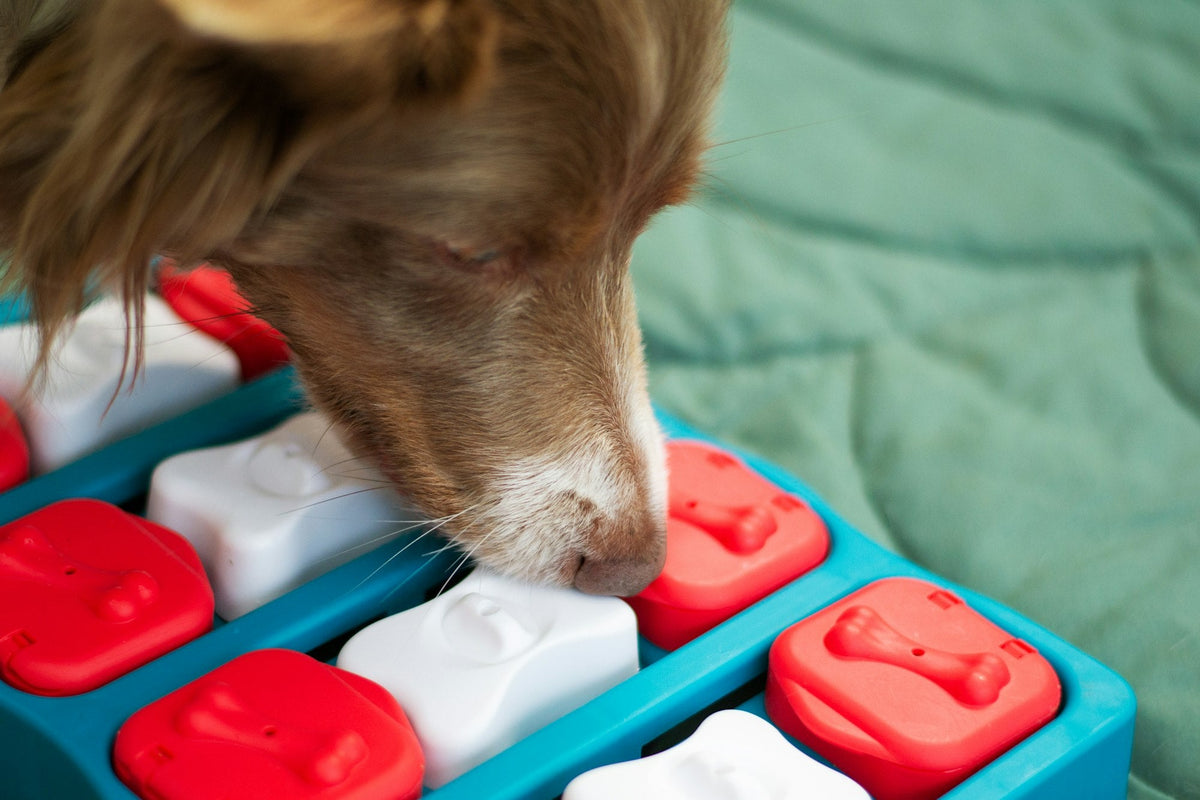
- Food puzzle toys — start with easy levels.
- Muffin tin and tennis balls.
- Towel roll — treats rolled inside a towel.
- Bottle spinner — supervised only, remove caps and labels.
- Egg carton or paper bag puzzles — supervise so paper isn’t eaten.
Licking and chewing
- Lick mats spread with wet food or plain yogurt (dog-safe ingredients only; avoid xylitol).
- Frozen stuffed toys — great for hot days or when you leave.
- Long-lasting chews sized for your dog, under supervision.
Learning
- A new trick each week.
- Name that toy.
- Impulse-control games — “wait” at the door, “leave it.”
- Hand target (“touch”).
New experiences
- A new route or park — novelty is enrichment.
- Calm people-watching from a bench or dog-friendly café.
Mental stimulation without food
For dogs on special diets or who are less food-motivated:
- Toy-based “find it” and name-that-toy games
- Tug with “drop” and “take it” cues
- Sniff walks and new environments
- Trick training using play or praise as the reward
- Hide-and-seek with you as the prize
When you’re at work
- A sniff walk and short game before you leave
- A frozen stuffed toy or lick mat as you go
- A safe chew in their resting area
- A midday walker for longer days
Leave only toys and chews that are safe to use unsupervised. If your dog is distressed when alone, talk to your vet or a qualified behavior professional.
On crate rest or after surgery
Dogs on restricted exercise often benefit from calm enrichment — lick mats, gentle sniffing games, and simple trick training that doesn’t involve jumping. Always follow your veterinarian’s instructions about what activity is allowed.
How much mental stimulation does a dog need?
There’s no fixed number, but a few short sessions a day (5–15 minutes) plus daily sniffing on walks suits most dogs. Working breeds may need more. Watch your dog: a satisfied dog settles easily afterward.
| Time available | Quick plan |
|---|---|
| 5 minutes | “Find it” with part of breakfast |
| 15 minutes | Trick session + snuffle mat |
| 30 minutes | Sniff walk on a new route |
| While you work | Frozen toy or lick mat |
Prefer games you play together?
For energetic, play-together ideas, see our 15 indoor games for dogs. And if you’d like a reason to get out and try new places, our list of 100 things to do with your dog is full of them.
FAQ
Does mental stimulation tire dogs out?
Yes. Many owners find 15 minutes of sniffing or problem-solving leaves their dog as settled as a longer walk.
Are puzzle toys good for dogs?
Yes, when matched to your dog’s level. Start easy so your dog succeeds, and supervise until you know how they use it.
Is sniffing good for dogs?
Sniffing is a natural, satisfying behavior and a key part of enrichment. Build sniffing time into every walk.
What is the best mental stimulation for a high-energy dog?
A mix of sniffing, training and structured play like tug and fetch — and plenty of rest afterward.
Related reading
Sources
- PDSA — Exercise for dogs: our ultimate guide
- American Kennel Club — Depression in Dogs (enrichment as part of support)