Dog Behavior
Why Is My Dog Sad? Signs, Common Causes and When to Call the Vet

Quick answer: A dog can seem sad for many reasons — a change in routine, a move, losing a companion, boredom, too little exercise, stress, or pain and illness. Dogs do experience low moods, but because a “sad” look can also be a sign of discomfort, any sudden or lasting change in behavior is worth checking with your veterinarian first.
You know your dog’s normal. So when the tail wags a little less, the greeting at the door goes quiet, or they stop bringing you the toy they usually push into your lap, you notice. This guide explains what might be behind it, what you can do at home, and when a change is more than a mood.
Can dogs actually feel sad?
Yes — dogs experience emotions, and veterinary behaviorists recognize that dogs can go through periods of low mood or withdrawal, often described as depression. The American Kennel Club notes that the clearest sign is usually a change in your dog’s normal demeanor, such as losing interest in a game they always loved.
What dogs don’t do is feel sad in exactly the way people do, or hide it for complicated reasons. A dog who seems sad is usually telling you that something in their body, routine or environment has changed.
Signs your dog may be sad or low
- Less interest in walks, play or favorite toys
- Sleeping more than usual, or lying in one place for long periods
- Eating less, or showing less interest in treats
- Withdrawing — staying in another room, not greeting you
- Or the opposite: becoming unusually clingy
- Low tail carriage, a lowered head, less “bounce” in their body language
- Licking or chewing their paws more than usual
- Restlessness, pacing or trouble settling
One sign on its own, for one afternoon, rarely means much. A cluster of changes that lasts several days is what deserves attention.
Common reasons a dog seems sad
| Possible cause | What it can look like |
|---|---|
| Pain or illness | Lethargy, reluctance to move, appetite changes, hiding, sensitivity to touch |
| Change in routine | New work hours, a new baby, a family member leaving for college |
| Moving home | Unsettled behavior, sniffing and pacing, clinginess for a few days or weeks |
| Loss of a companion | Searching, waiting by the door, less play — after a person or another pet is gone |
| Boredom / under-stimulation | Sleeping a lot, sighing, then bursts of chewing or barking |
| Stress or fear | After fireworks, building work, visitors or a frightening event |
| Aging | Slower, sleepier, less playful — sometimes normal, sometimes pain |
| Weather and season | Fewer outdoor adventures in winter or a heatwave |
Pain is the cause people miss most
Dogs are very good at hiding discomfort. Sore joints, dental pain, an upset stomach or an injury can look like a dog who is simply “down.” This is why veterinarians recommend ruling out a medical cause before assuming a dog is just sad.
Why is my dog suddenly quiet?
A sudden change — a normally chatty, busy dog who goes quiet overnight — is more likely to have a physical cause than a gradual change. If your dog is suddenly quiet and also eating less, moving stiffly, breathing differently or seems uncomfortable, call your veterinarian rather than waiting.
Call your vet promptly if your dog:
- stops eating or drinking, or vomits repeatedly
- seems to be in pain, cries out, or doesn’t want to be touched
- is weak, collapses, or has pale gums
- has trouble breathing or a swollen, tight belly
- has stopped behaving like themselves for more than a day or two
If anything feels like an emergency, contact your nearest emergency veterinary clinic straight away.
How to help a sad dog feel better
Once your vet has ruled out a medical problem, most dogs respond well to small, consistent changes. The AKC lists more quality time, more walks and play, a steady routine and mental enrichment as simple ways to help.
- Keep the routine predictable. Meals, walks and bedtime at similar times every day give dogs security, especially after a change at home.
- Add one extra outing. A slow “sniff walk” somewhere new often lifts a dog’s mood more than a long, fast walk on the same route. Our guide to how often to walk your dog helps you find the right amount.
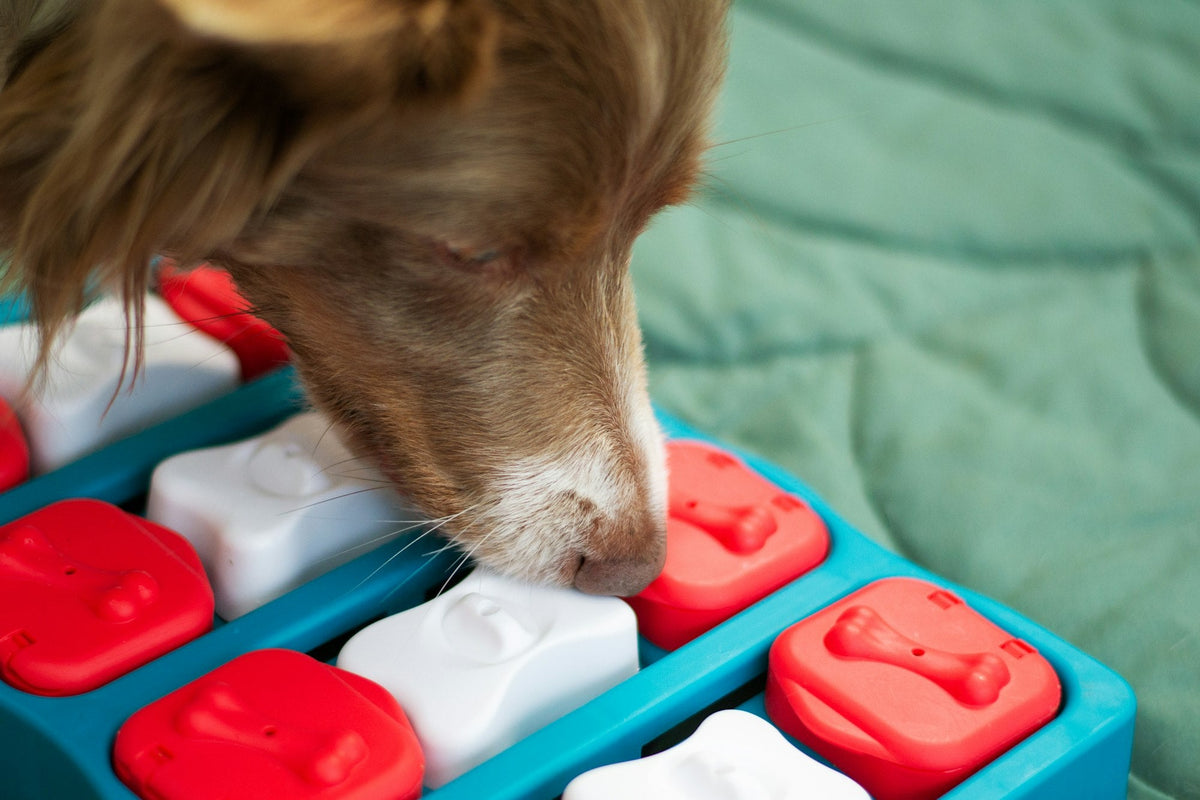
- Give their brain a job. Food puzzles, scatter-feeding and short training games are gentle ways to re-engage a low dog. See our mental stimulation ideas.
- Reward the good moments — calmly. Praise and play when your dog shows interest. Avoid smothering a withdrawn dog; let them come to you.
- Protect rest. A quiet, comfortable bed away from foot traffic helps dogs recover from stress.
- Give grief time. After losing a companion, some dogs take weeks to settle. Keep routines steady and don’t rush to replace the companion just to fix the mood.
When a trainer or behaviorist can help
If your dog’s low mood is linked to fear, anxiety or a past trauma, a qualified behavior professional working alongside your vet can build a plan. In some cases a veterinarian may recommend medication together with behavior support.
Is it sadness or boredom?
The two can look alike. A bored dog often perks up the moment something interesting happens; a dog who is unwell or truly low stays flat even when you pick up the leash. If your dog seems more under-stimulated than unhappy, read Is my dog bored? for the signs and the fixes.
How to tell your dog is feeling better
Look for the return of their personal “normal”: the greeting at the door, the play bow, the nosy interest in what you’re cooking. Our guide to how to tell if your dog is happy lists the body-language signs to watch for.
FAQ
Can dogs get depressed?
Dogs can experience periods of low mood and withdrawal that behaviorists describe as depression, often after a loss, a big change, or because of pain or illness. A veterinary check is the right first step.
How do I cheer up my dog?
Keep routines steady, add short outings and sniffing time, offer food puzzles and gentle training games, and spend calm time together. If nothing changes within a few days, speak to your vet.
Do dogs get sad when you leave?
Many dogs notice your routine and may be quieter when you’re away. Mild disappointment is normal. Distress — howling, destroying exits, toileting indoors only when alone — can be separation-related and is worth discussing with your vet or a qualified behavior professional.
Can dogs miss other dogs or people?
Dogs form strong attachments, and many show changes in behavior after a companion leaves or dies. Patience, routine and gentle activity usually help over time.
Why does my dog look sad all the time?
Some breeds simply have droopy eyes and a serious expression. Judge mood by behavior — appetite, play, energy, greeting — rather than by facial shape.
Related reading
- Is my dog bored? 10 signs and what actually helps
- Mental stimulation for dogs at home
- How to tell if your dog is happy
Sources
- American Kennel Club — Depression in Dogs: Signs, Symptoms, Treatments
- American Kennel Club — How to Read Dog Body Language
This article is general information, not veterinary advice. If you’re worried about your dog’s health or behavior, please contact your veterinarian.