Dog Behavior
Why Does My Dog Follow Me Everywhere? 7 Reasons (and When It’s Too Much)
Quick answer: Dogs follow their owners because of attachment, curiosity, routine and reward — you are the source of food, walks, attention and fun, so staying close pays off. Some breeds were bred to work closely with people and are natural “shadows.” In most dogs it’s normal. It may need attention if your dog becomes distressed whenever you leave, or if the behavior starts suddenly alongside other changes.
The kitchen, the sofa, the laundry room, the bathroom door. If you have a “Velcro dog,” you rarely walk anywhere alone. Here’s what’s behind it.
7 reasons your dog follows you everywhere
1. They’re attached to you
Dogs are social animals that form strong bonds with their people. Research on dog–human relationships has found that mutual gaze between dogs and owners is linked to a rise in oxytocin, a hormone associated with bonding. Wanting to be near you is, quite simply, part of that bond.
2. It’s in their genes
The American Kennel Club points out that many breeds were developed to work closely with humans — herding dogs, gundogs and companion breeds in particular. Border collies, Labradors, golden retrievers, Shetland sheepdogs, Vizslas and many toy breeds are famous shadows.
3. You’ve (kindly) reinforced it
Every time your dog follows you to the kitchen and something good happens — a scrap, a chat, a scratch behind the ears — following becomes more worthwhile. You didn’t do anything wrong; you just taught them that staying close is rewarding.
4. They don’t want to miss anything
To a dog, you getting up is interesting. You might be heading for the leash, the treat cupboard or the car keys. Curiosity alone keeps many dogs on your heels.
5. They’re bored
A dog without enough to do will make you their entertainment. If the following comes with sighing, pestering and nudging, they may need more exercise or mental work. See Is my dog bored?
6. Something has changed
A new home, a new baby, a family member moving out or a change in your work schedule can make dogs stick closer for a while until things feel predictable again.
7. They feel unwell, anxious or are getting older
Some dogs become clingier when they don’t feel well, when they’re frightened (thunder, fireworks), or as they age and their senses decline. A sudden increase in clinginess alongside other changes is worth mentioning to your vet.
Is it normal for my dog to follow me to the bathroom?
Yes, very. To your dog, a closed door just means you’ve disappeared. Many dogs simply wait outside and are perfectly calm about it.
Normal shadowing vs. separation-related distress
| Usually normal | Worth getting help |
|---|---|
| Follows you, then settles nearby | Can’t settle at all unless touching you |
| Calm when you leave the house | Howls, barks, drools or pants heavily when alone |
| Fine with other family members | Scratches or chews doors and windows to get out |
| Relaxed when you come home | Toilets indoors only when left alone |
If the right-hand column sounds familiar, speak to your veterinarian and ask about a qualified behavior professional. Separation-related problems respond best to a plan, not to punishment.
How to give your dog a little more independence
- Teach a “go to bed” or “settle” cue and reward calm time on a mat a few steps away.
- Practice tiny absences. Step into another room for a few seconds and return before your dog worries. Build up slowly.
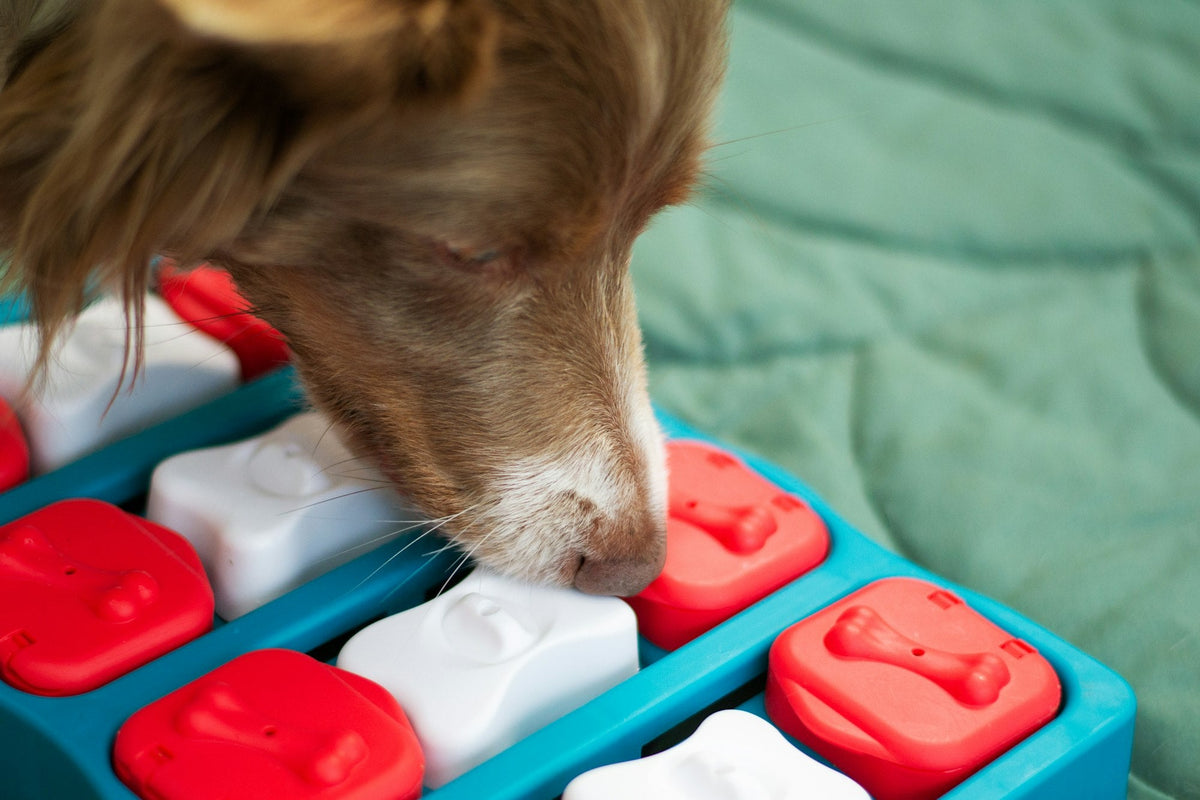
- Make alone time pleasant with a long-lasting chew or a food puzzle.
- Meet the real needs first. A well-exercised, mentally busy dog is far more likely to nap than patrol. Try our indoor games for dogs.
- Stay calm with arrivals and departures. Big goodbyes can make leaving feel like an event.
The upside of a shadow
A dog who wants to be with you is offering something lovely: constant company. If yours is a happy follower, lean into it with activities you do together — our guide to bonding with your dog has ideas that turn that closeness into shared experiences.
FAQ
Why does my dog follow me and not my partner?
Dogs often attach most to the person who feeds, walks and plays with them most, or whose routine is most predictable. Sharing those jobs can spread the love.
Does following me mean my dog loves me?
It usually means your dog finds you important and rewarding. Combined with relaxed body language, soft eyes and a wagging greeting, it’s a good sign of a strong bond.
Why has my dog suddenly started following me everywhere?
Sudden clinginess can follow a change at home, a frightening event, or feeling unwell. If it comes with changes in appetite, energy or toileting, check in with your vet.
Should I stop my dog following me?
Not if your dog is calm and copes well alone. Only work on independence if the following is linked to distress or makes it hard for your dog to rest.
Related reading
Sources
- American Kennel Club — Why Does My Dog Follow Me Everywhere?
- Nagasawa M. et al. (2015), Science — Oxytocin-gaze positive loop and the coevolution of human-dog bonds