Dog Behavior
Why Does My Dog Stare at Me? What That Look Really Means
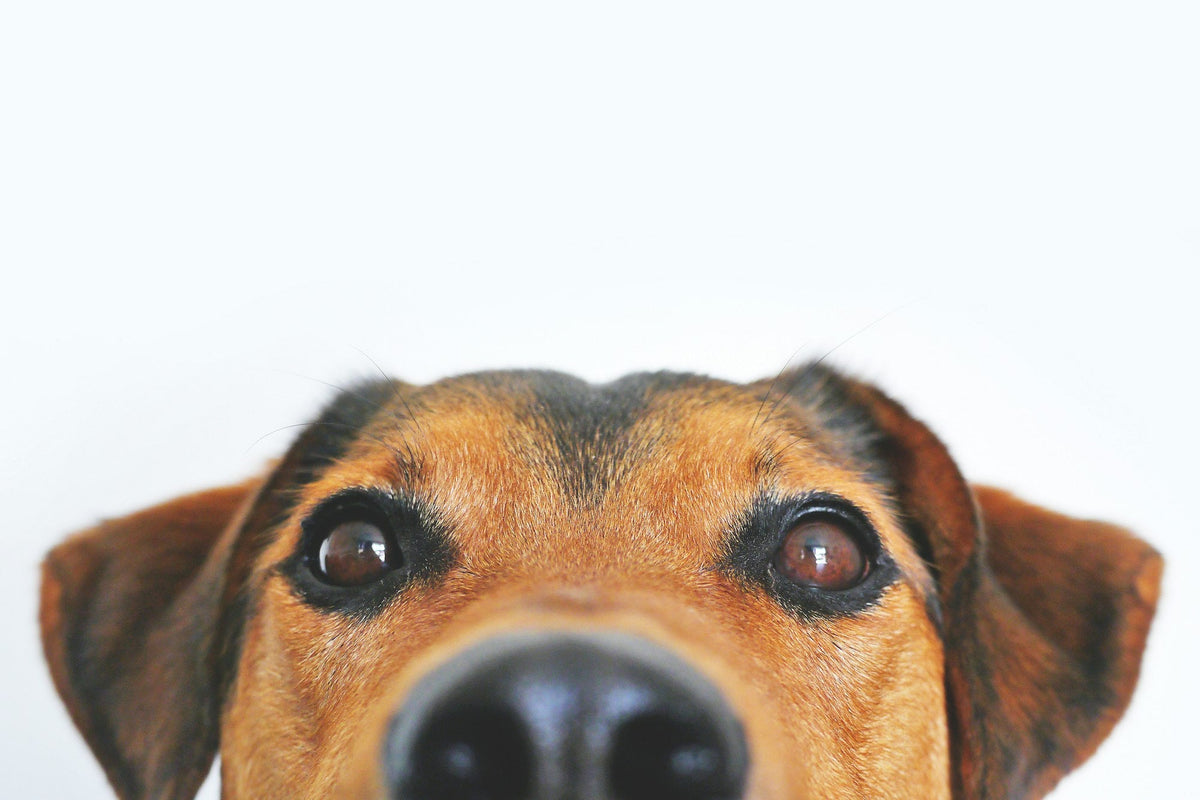
Quick answer: Most of the time, a dog stares at you because they’re watching for cues — food, a walk, play or attention — or because they feel connected to you. A soft, relaxed gaze is a sign of trust. A hard, fixed stare with a stiff body is different and can be a warning. Read the whole dog, not just the eyes.
You look up from your book, and there they are: two eyes fixed on you. Sometimes it’s sweet. Sometimes it’s slightly unnerving. Here’s how to decode it.
6 reasons your dog stares at you
1. They’re reading you
Dogs are remarkably good at following human signals — where we look, how we move, what we pick up. Watching your face and hands helps them predict what happens next.
2. They want something
Dinner time, the leash, the ball under the sofa. A hopeful stare, often with a little head tilt or a paw, is your dog asking. If you always respond, the stare gets more frequent — it works.
3. Affection and connection
A 2015 study in the journal Science found that mutual gazing between dogs and their owners was associated with increased oxytocin, a hormone linked to bonding, in both dogs and people. That soft, slow look across the room is part of how you and your dog connect.
4. They’re waiting for direction
Well-trained dogs often “check in” by looking at their person on walks or during training. This is something trainers actively reward.
5. They’re confused or unsure
A stare with a tilted head can mean your dog is trying to work out what you want, especially if you’ve said a word they half-recognize.
6. Discomfort or a warning
A hard, unblinking stare with a stiff body, a closed mouth, raised hackles or a growl is a very different message: back off. This often appears around food, toys or resting places. Give the dog space and seek help from a qualified behavior professional if it happens regularly.
Soft gaze vs. hard stare
| Soft, friendly gaze | Hard, worried stare |
|---|---|
| Relaxed, “squinty” eyes, normal blinking | Wide, fixed eyes; little or no blinking |
| Loose body, soft mouth, maybe a gentle wag | Frozen, stiff body, closed mouth |
| Ears in their natural position | Ears pinned back or rigidly forward |
| Looks away easily | Holds the stare, may lift lip or growl |
Why does my dog stare at me while I eat?
Because food is fascinating and you might share. If you don’t want begging, feed your dog first, ask for a “go to bed” during meals and reward them there instead of from the table.
Why does my dog stare at me when they poop?
Dogs are vulnerable while toileting, and many look to their trusted person — possibly for reassurance that all is safe. It’s normal and nothing to worry about.
Why does my dog stare at me in bed or on the sofa?
Often it’s simply companionable watching, or a hint that it’s nearly time for something — bedtime, a last toilet trip, a snack. If your dog seems settled, enjoy it.
Should I stare back?
With your own relaxed dog, a soft gaze and a slow blink is fine. Avoid staring at unfamiliar or nervous dogs — direct eye contact can feel threatening to them. Look slightly away and let them approach you.
Turn the gaze into something useful
Many trainers teach a “watch me” or “check in” cue: reward your dog for looking at you, then build up to longer focus. It’s a lovely foundation for walks, games and even photographs — a dog who looks at you on cue makes getting the perfect photo far easier.
FAQ
Is it bad to stare into a dog’s eyes?
Not with your own relaxed dog. With unfamiliar or anxious dogs, avoid prolonged direct eye contact.
Why does my dog stare at me without blinking?
If the rest of the body is relaxed, they may just be focused. A fixed, unblinking stare with a stiff body is a sign of tension — give space.
Why does my dog stare at me and then look away?
Looking away is a polite, calming signal in dog language. It usually means your dog is comfortable and not seeking conflict.
My senior dog stares at walls or into space — is that normal?
Staring blankly at walls, getting stuck in corners or seeming confused can be signs of age-related cognitive changes or other health issues. Mention it to your vet.
Related reading
Sources
- Nagasawa M. et al. (2015), Science — Oxytocin-gaze positive loop and the coevolution of human-dog bonds
- American Kennel Club — How to Read Dog Body Language
- RSPCA — Understanding your dog’s body language